The Science Your Doctor Wishes You Knew
Your doctor probably keeps up with the research. The challenge is that a fifteen-minute appointment leaves little time to explain what that research actually means for your daily life. That gap between clinical knowledge and real-world application is where most people get lost, and it is exactly where this month’s report focuses.
Recently, three stories have stood out to us: The first involves the most talked-about class of weight-loss drugs in a generation, and a serious blind spot that almost nobody is addressing. The second is a large study on women’s longevity that identifies a single, trainable physical marker as one of the strongest predictors of how long you will live. And the third is a sweeping analysis showing that exercise performs as well as, or better than, medication and therapy for depression and anxiety.
These stories aren’t fringe. They come from major journals, with large sample sizes and rigorous methods. Together, they reinforce something we see in our gym every week: the basics work. Strength training, consistent movement, and showing up in a coached group setting are not just good habits; they are, according to the latest evidence, some of the most powerful health interventions available.
This month’s report connects the dots between what the science says and what you are already doing every time you walk through our doors.
Disclaimer: The FitNKC Health Report is our monthly series spotlighting progress, important research, emerging controversies, and good news worth knowing in the health and wellness space. In a busy life, it is hard to keep up with what is actually happening in science and medicine, so we do the reading for you. Everything featured here is commentary on existing research and reporting. We do not claim ownership of any sourced material, and we encourage you to follow the links and dive deeper into any story that resonates.
GLP-1 Drugs and the Muscle Problem Nobody Is Talking About
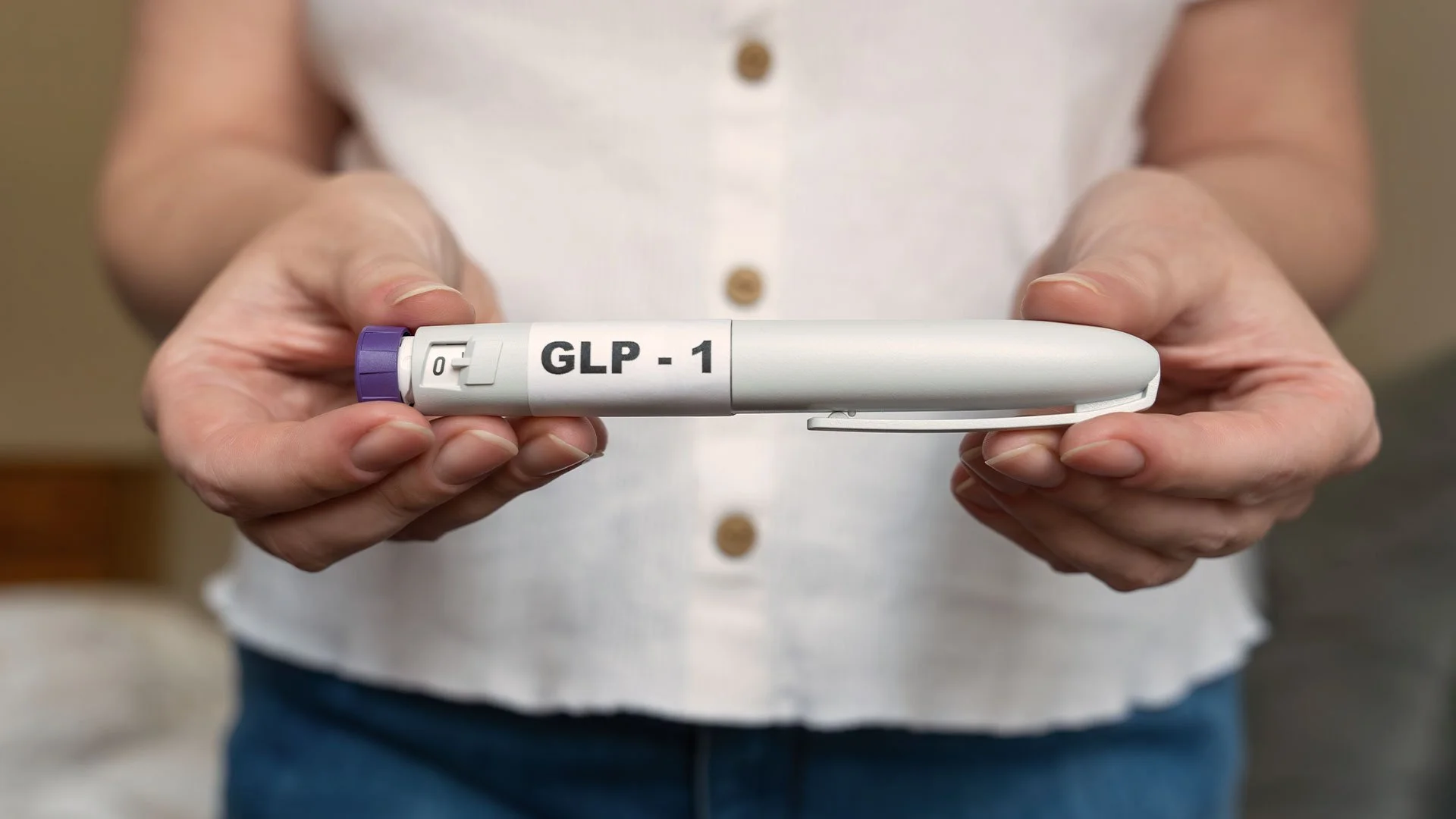
GLP-1 receptor agonists like semaglutide and tirzepatide have become the dominant story in weight loss. The results are hard to argue with. Patients on these medications routinely lose 10-15% or more of their body weight, and the cardiovascular benefits are drawing serious attention from cardiologists. But there is a cost that has been underreported, and it matters a great deal if you care about long-term function.
When you lose weight rapidly without resistance training, you do not just lose fat. You lose muscle. Research published in Diabetes, Obesity and Metabolism this year confirms what exercise scientists have warned about for months: the SEMALEAN study of 106 patients on semaglutide 2.4 mg saw participants lose an average of 13% of their body weight at 12 months, with meaningful early lean mass decline alongside the fat loss (Alissou et al., 2026). Muscle is far harder to build back than fat is to regain, and losing it sets off a chain of problems that most prescribers are not discussing with their patients.
The SEMALEAN study offered both a warning and a practical signal. Lean mass dropped by about 3 kilograms at seven months. But lean mass then stabilized from that point forward, and by twelve months, handgrip strength had actually improved by 4.5 kilograms. The prevalence of sarcopenic obesity in the cohort dropped from 49% at baseline to 33% at twelve months (Alissou et al., 2026). That is not just slowed loss. That is functional improvement while on the medication.
This is an important distinction. The drug alone shrinks the body. The drug plus strength training reshapes it. One path leads to a lighter but weaker version of yourself. The other preserves the tissue that keeps you functional, metabolically healthy, and independent as you age. The SEMALEAN results suggest that training two to three times per week is the threshold where lean mass preservation becomes reliable. That is not an overwhelming commitment. It is the kind of schedule most FitNKC members already follow.
There is also a practical reality that does not get enough airtime. Muscle is metabolically active tissue. It burns more calories at rest than fat does, and it plays a direct role in blood sugar regulation, joint stability, and bone density. Losing large amounts of it during weight loss can set people up for regain, injury, and metabolic problems down the road, even if the number on the scale looks better in the short term.
A few things deserve honest acknowledgment here. A Circulation editorial noted that the research on GLP-1 muscle loss is more nuanced than the headlines suggest, with some reductions in muscle volume likely reflecting expected changes alongside significant weight loss rather than a uniformly harmful effect (Linge et al., 2024). The editorial still concludes that muscle health deserves more objective, comprehensive assessment as more people start these medications. Additionally, unregulated peptide products sold online and popular "microdosing" regimens circulating on social media are not supported by clinical evidence. If you are considering these drugs, work with your physician, not an influencer.
Bottom line: If you are on a GLP-1 medication or considering one, resistance training is not optional. It is the most effective way to protect the function you need to live well at the weight you end up at. Functional fitness training, the kind FitNKC delivers in every class, is exactly the type of work that protects lean mass and improves handgrip strength, without requiring you to design your own program.
Alissou, M., Demangeat, T., Folope, V., Van Elslande, H., Lelandais, H., Blanchemaison, J., Cailleaux, P.-E., Guney, S., Aupetit, A., Aubourg, A., Rapp, C., Petit, A., Godin, M., Vignal, L., Grigioni, S., Déchelotte, P., Colange, G., Coëffier, M., & Achamrah, N. (2026). Impact of semaglutide on fat mass, lean mass and muscle function in patients with obesity: The SEMALEAN study. Diabetes, Obesity and Metabolism, 28(1), 112-121. https://doi.org/10.1111/dom.70141
Linge, J., Birkenfeld, A. L., & Neeland, I. J. (2024). Muscle mass and glucagon-like peptide-1 receptor agonists: Adaptive or maladaptive response to weight loss? Circulation. https://doi.org/10.1161/CIRCULATIONAHA.124.067676
Grip Strength Might Predict How Long Women Live
Grip strength turned out to be one of the strongest predictors of mortality in a major study of older women published this February in JAMA Network Open. The findings were not subtle. Women in the highest grip strength group had a 33% lower risk of dying over the eight-year follow-up period compared to those in the lowest group. For every additional 7 kilograms of grip strength, mortality risk dropped by 12% (LaMonte et al., 2026).
The study followed 5,472 women between the ages of 63 and 99 as part of the Women's Health Initiative OPACH cohort over more than eight years. Researchers also tested chair-stand performance, which showed similar predictive value. What makes these results particularly compelling is how thoroughly the researchers controlled for confounding factors. The associations held after adjusting for accelerometer-measured physical activity, sedentary behavior, timed walk performance, and sociodemographic and clinical characteristics (LaMonte et al., 2026). Strength mattered on its own terms.
One finding deserves special attention. Muscle strength was associated with lower mortality even among women who did not meet the standard recommendation of 150 minutes per week of aerobic activity. In other words, if you are someone who struggles to hit the cardio benchmarks that public health guidelines emphasize, building and maintaining strength still offers a significant protective effect. The two are not interchangeable, but strength carries its own independent weight.
Grip strength, to be clear, is not really about your hands. It functions as a proxy for total body strength, reflecting the overall health of your muscular and neuromuscular systems. When your grip is strong, it generally means the rest of you is strong too. This is why researchers use it as a quick, reliable measurement in clinical settings. It is inexpensive, takes seconds to administer, and correlates with outcomes that far more complex tests also predict.
The practical takeaway is encouraging rather than intimidating. This is not about competitive powerlifting or setting records. It is about having enough functional strength to live independently and well for a long time. Opening jars, carrying groceries, getting up off the floor without help. These everyday tasks depend on the same muscular capacity that this study linked to survival. Deadlifts, farmer carries, pull-ups, kettlebell swings. These are the movements that build the kind of strength this study measured, and they are built into every week of programming at FitNKC. Most members train this way regularly without ever thinking of it as longevity work. It is.
Bottom line: Grip strength is one of the most reliable predictors of how long and how well you will live, especially for women. You do not need to be the strongest person in the room. You need to be strong enough, and you need to maintain that strength over time through consistent resistance training.
LaMonte, M. J., Hyde, E. T., Nguyen, S., Castro, E., Seguin-Fowler, R. A., Eaton, C. B., Miller, C. R., Di, C., Stefanick, M. L., & LaCroix, A. Z. (2026). Muscular strength and mortality in women aged 63 to 99 years. JAMA Network Open, 9(2), e2559367. https://doi.org/10.1001/jamanetworkopen.2025.59367
Exercise Rivals Medication for Depression and Anxiety
A sweeping analysis published in the British Journal of Sports Medicine this February may be the most comprehensive look at exercise and mental health ever conducted. The numbers alone demand attention: 57 pooled analyses drawn from over 800 individual studies, covering 57,930 participants ranging in age from 10 to 90. The conclusion was clear and consistent. Exercise reduced symptoms of depression and anxiety at levels comparable to, and in many cases exceeding, those achieved by medication and psychotherapy (Singh et al., 2026).
That sentence is worth sitting with. The research did not find that exercise helps a little, or that it is a nice complement to real treatment. It found that exercise is real treatment, performing on par with the interventions most commonly prescribed by mental health professionals. This held true across age groups and across sexes, which means the effect is not limited to a narrow demographic or a specific stage of life.
The details matter for how you train, not just whether you train. Aerobic exercise showed the strongest effects for depression specifically. But all forms of exercise produced meaningful reductions in symptoms. The researchers also found that the format of exercise influenced outcomes. Group-based and supervised exercise produced the most robust mental health benefits, outperforming solo and unsupervised activity.
That distinction is worth lingering on. There is something about training alongside other people, with a coach guiding the session, that amplifies the psychological return. The researchers did not speculate extensively about why, but the pattern was clear in the data. Accountability, social connection, and structured progression all likely play a role. Showing up to a class where someone knows your name and where others are working alongside you is fundamentally different from grinding through a solo workout with headphones on.
The scale of this analysis also matters. Previous studies have shown exercise benefits for mental health, but critics could always point to small sample sizes or narrow populations. With nearly 58,000 participants across all age groups and both sexes, that criticism does not hold here. The effect is broad, replicable, and substantial.
None of this means you should stop taking prescribed medication or skip therapy. Mental health is complex, and treatment should be individualized with the help of a qualified professional. What this research does say is that exercise belongs in the conversation as a primary tool, not an afterthought. If you are already training consistently, the mental health benefits of that commitment are likely larger than you realize.
Bottom line: Exercise is not just good for your mood. According to the largest analysis of its kind, it performs as well as or better than medication and therapy for depression and anxiety. Group and coached formats, exactly what FitNKC delivers in every session, produced the strongest mental health outcomes.
Singh, B., et al. (2026). Effect of exercise on depression and anxiety symptoms: Systematic umbrella review with meta-meta-analysis. British Journal of Sports Medicine. https://doi.org/10.1136/bjsports-2025-110301
About The FitNKC Health Report
Every month, we examine recent peer-reviewed research and online articles to share what we are learning about health, fitness, and wellness. No co-signing trendy supplements. No fear-mongering about training methods. Just an honest take on stories and advancements in health and wellness.
Have a Story We Should Cover?
Found a study that challenges conventional wisdom or confirms what actually works? Came across an article that made you think twice? We are always looking for research and stories worth sharing. Submit your suggestions using the link below.
Disclaimer: Featuring a study or topic in this report does not constitute endorsement, support, or recommendation of any particular product, method, claim, or course of action. The FitNKC Health Report covers advancements and developments in the health and fitness space strictly for commentary and discovery purposes. This content should not be construed as medical, nutritional, or professional advice, nor as factual claims or guidance. FitNKC is not prescribing, diagnosing, promoting, or advising any course of action; we are simply sharing what we find relevant or interesting in our field. This Health Report exists under fair use for purposes of commentary, criticism, and analysis. Readers should consult qualified professionals before making changes to their health, fitness, or nutrition practices. If you are an author, researcher, publisher, or rights holder of any content referenced in this report and would like to request updates, modifications, or removal, please contact us directly at this link. FitNKC is committed to accuracy, proper attribution, and respect for intellectual property.